
From Startup to $200M Exit: The Paystack Story
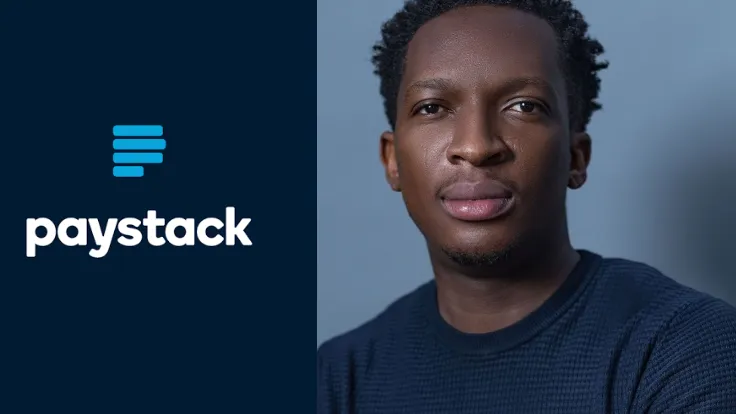
In the fast-evolving world of African technology startups, few stories resonate as deeply as that of Shola Akinlade and the rise of Paystack. It is not just a tale of financial success or a headline-grabbing acquisition—it is a blueprint for innovation, resilience, and the power of solving real, painful problems at scale.
From humble beginnings to a landmark $200 million acquisition by Stripe, the Paystack journey represents a defining chapter in Africa’s tech renaissance.
The Early Spark: A Problem Waiting to Be Solved
Before Paystack entered the scene, the African digital payments landscape—especially in Nigeria—was riddled with inefficiencies. Businesses that wanted to accept payments online faced a nightmare of fragmented systems, failed transactions, poor user interfaces, and extremely complex integration processes.
For many entrepreneurs, receiving payments from customers was harder than acquiring the customers themselves.
Shola Akinlade experienced this frustration firsthand. As a software developer, he had a deep understanding of how broken the infrastructure was. Payment gateways were not built with developers in mind. Documentation was poor, APIs were clunky, and systems lacked reliability.
But where others saw a barrier, Akinlade saw an opportunity.
He recognized that the future of commerce in Africa would be digital—and that for this future to thrive, there needed to be a simple, reliable, and developer-friendly way to move money online.
The Birth of Paystack
In 2015, alongside his co-founder Ezra Olubi, Akinlade launched Paystack with a bold and focused mission:
“Make it incredibly easy for businesses in Africa to accept payments online.”
This mission may have sounded simple, but executing it required rethinking everything about how payments worked in the region.
Instead of building just another payment gateway, Paystack focused on building infrastructure—tools that developers and businesses could rely on to power their operations seamlessly.
A Developer-First Revolution
One of the most defining decisions Paystack made early on was to prioritize developers.
At a time when most fintech companies were focused on end-users, Paystack took a different route:
Win the developers, and you win the market.
They built:
- Clean, well-structured APIs
- Clear and comprehensive documentation
- Simple onboarding processes
- Reliable and fast transaction systems
For the first time, developers in Nigeria and across Africa could integrate payments into their products in hours—not weeks.
This approach created a powerful ripple effect.
Startups began adopting Paystack because it was easy. Developers recommended it because it worked. Businesses trusted it because it was reliable.
And just like that, Paystack became the backbone of a new generation of African digital businesses.
The Y Combinator Breakthrough
A major turning point came when Paystack was accepted into Y Combinator, one of the most prestigious startup accelerators in the world.
This was a significant milestone—not just for Paystack, but for the African tech ecosystem as a whole.
Through Y Combinator, Akinlade and his team gained:
- Access to world-class mentorship
- Exposure to global investors
- Funding to accelerate growth
- Entry into an elite network of founders and innovators
More importantly, it validated Paystack’s vision on a global stage.
It signaled that African startups were not just local solutions—they had the potential to compete globally.
Scaling Across Africa
With momentum on their side, Paystack began to scale rapidly.
They expanded their services beyond Nigeria into other African markets, enabling businesses across the continent to:
- Accept payments via cards, bank transfers, and mobile money
- Manage transactions with ease
- Build scalable financial systems
As e-commerce, fintech, and digital services grew across Africa, Paystack positioned itself as critical infrastructure—quietly powering thousands of businesses behind the scenes.
From small startups to large enterprises, companies relied on Paystack to move money efficiently and securely.
And as trust grew, so did volume.
The $200 Million Moment
In October 2020, history was made.
Stripe announced its acquisition of Paystack for over $200 million.
At the time, it was one of the largest acquisitions of a startup in Africa.
This moment was bigger than Paystack.
It was a signal to the world that:
- African startups can build world-class products
- Global tech giants are paying attention to Africa
- The continent is a serious player in the global tech ecosystem
For founders, investors, and aspiring entrepreneurs across Africa, the Paystack exit was proof that the dream was possible.
Beyond the Exit: Building an Ecosystem
Many founders choose to step away after a major acquisition. But Shola Akinlade took a different path.
He remained deeply involved in growing Paystack and strengthening the African startup ecosystem.
Under Stripe, Paystack continued to expand its capabilities and reach, maintaining its role as a key enabler of digital commerce across Africa.
But Akinlade’s impact goes even further.
Through mentorship, investment, and leadership, he has helped shape a new generation of founders who are building ambitious, globally competitive companies.
The Real Lesson: Solve Real Problems
At its core, the Paystack story is not just about funding, growth, or acquisition.
It is about clarity of purpose.
Shola Akinlade did not start with hype.
He started with a problem.
A painful, obvious, widespread problem.
And instead of building something flashy, he built something useful.
That decision made all the difference.
The Ripple Effect Across Africa
Today, the impact of Paystack can be seen everywhere:
- Thousands of businesses now accept payments seamlessly
- Startups launch faster with better infrastructure
- Developers have access to world-class tools
- Investors are more confident in African tech
The Paystack success story has also contributed to a surge in venture capital flowing into Africa, particularly in fintech.
It opened doors.
And many have walked through them.
Inspiration for the Next Generation
For entrepreneurs across Nigeria and Africa, the journey of Shola Akinlade offers powerful lessons:
- Start with a real problem
- Build for users, not hype
- Focus on simplicity and reliability
- Think globally from day one
- Stay consistent, even when growth is slow
Most importantly, it shows that you do not need to leave Africa to build something world-class.
You can build it here.
Conclusion: A Legacy Still Being Written
The story of Shola Akinlade and Paystack is far from over.
What began as a solution to a frustrating problem has become a cornerstone of Africa’s digital economy.
It is a story of vision, execution, and impact.
And more than anything, it is a reminder that the next global success story could be built right here—by founders who dare to think differently and build boldly.
As Africa’s tech ecosystem continues to grow, one thing is clear:
Paystack didn’t just process payments—it changed the game.


